
The epidemiology of generalised pustular psoriasis (GPP) in England
The GPA have conducted a new population-based study exploring the incidence, prevalence, mortality and life expectancy of people living with generalised pustular psoriasis in England. Published in the British Journal of Dermatology, the research provides important insights into the burden of this rare but serious condition.
What is generalised pustular psoriasis?
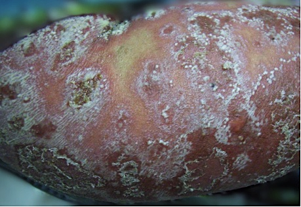
Generalised pustular psoriasis (GPP) is a rare, potentially life-threatening inflammatory skin disease characterised by sudden outbreaks of widespread, painful redness and sterile, pus-filled pustules which may merge to form “lakes” of pus. GPP can be accompanied by systemic symptoms (including fever, fatigue, malaise, and musculoskeletal pain) and serious complications (such as secondary infections, sepsis, and multi-organ dysfunction and failure).
How common is GPP globally?
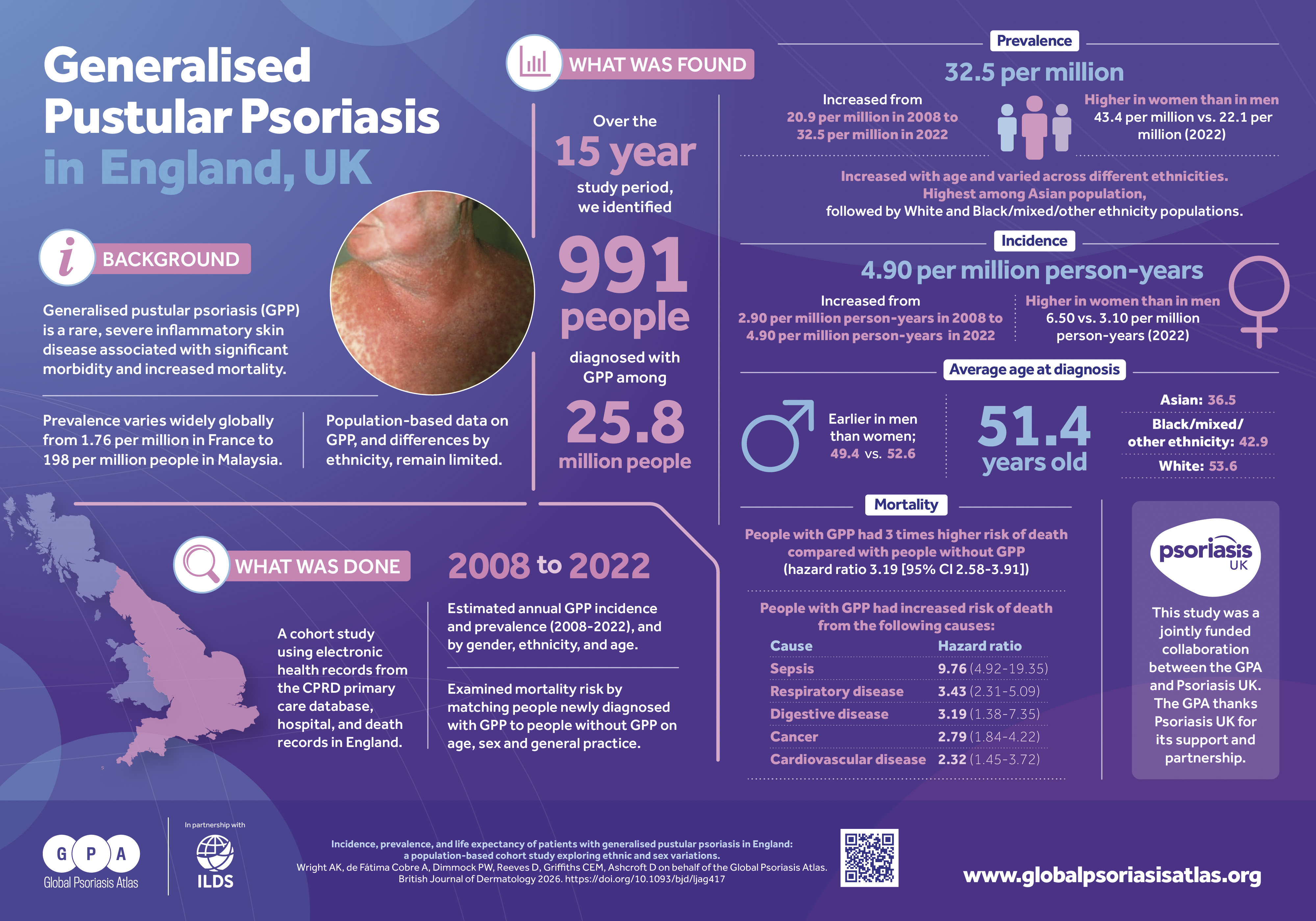
Despite its clinical significance, population-based data on the epidemiology of GPP remains limited. Reported prevalence rates of GPP vary widely globally, ranging from 1.76 per million people in France to 198 per million people in Malaysia.
Current evidence suggests GPP may be more common in Asian countries, particularly East Asian populations, compared to many Western regions, which contrasts with the pattern seen in plaque psoriasis. This ethnic variation may be linked to a higher frequency of specific inherited genetic mutations.
What did the study find?
Electronic health records from primary care, linked with hospital and mortality records and ethnicity data, were analysed to examine trends in GPP in England over a 15-year period, from 2008 to 2022. All-cause and cause-specific mortality risks were estimated in people with GPP compared with those without GPP, along with differences in life expectancy.
During the study period, 991 people with GPP were identified among 25.8 million people in England; 63% were women, 86% were of White ethnicity, 10% of Asian ethnicity, and 3% of Black, Mixed, or other ethnicity.
Prevalence increased by more than 50% between 2008 and 2022
The prevalence of GPP increased from 20.9 cases per million people in 2008 to 32.5 per million in 2022, a relative increase of ~56%.
Incidence remained relatively stable until 2017, with an upward trend observed up to 2022, reaching its peak at 4.9 per million person-years.
Differences observed by sex, ethnicity and age
GPP prevalence was higher among women than men and was highest among people of Asian ethnicity, followed by people of White ethnicity. Prevalence was much lower in those in the combined Black/Mixed/Other ethnic group. Prevalence also increased with age, with the highest rates among people aged 50 and over.
The mean age at which GPP developed also differed, with disease onset occurring earlier in men than women (49.4 vs. 52.6 years) and ~17 years earlier among Asian patients than White patients (36.5 vs. 53.6 years).
People with GPP had a substantially higher risk of death, and reduced life expectancy, than people without GPP
Compared with people without GPP, those newly diagnosed with GPP had more than three times the risk of death from any cause (hazard ratio 3.19).
People with GPP had elevated risks of death from several specific causes, including respiratory, circulatory and digestive diseases, and cancer. The risk of death from sepsis was particularly high, at almost ten times that of people without GPP.
Diagnosis of GPP at any age was associated with a reduction in life expectancy compared with people without the condition, with the greatest differences observed among those diagnosed at younger ages. For example, at age 40, people diagnosed with GPP were predicted to die on average 18 years earlier than their counterparts without GPP.
Why do these findings matter?
Although GPP is rare, its impact can be profound. Increasing recorded prevalence, differences between population groups and substantial excess mortality highlight the need for greater awareness, timely recognition and appropriate management of GPP and its associated complications to improve quality of life and outcomes for people living with the condition.
Published in the British Journal of Dermatology
Read the full paper here: https://doi.org/10.1093/bjd/ljag417
Watch the video below.


This study was a jointly funded collaboration between the GPA and Psoriasis UK. The GPA thanks Psoriasis UK
for its support of this collaborative work.
This website uses cookies!
We use cookies to tailor our content to your needs and continuously improve our website. You can decide which cookies you want to allow. Detailed information about the cookies we use can be found in our Privacy Policy and Cookie Settings. You can withdraw your consent at any time.

Which of these best describes you?