
Explore the data

PREVALENCE DATA
The prevalence (number of cases) of psoriasis appears to vary depending on genetic background and geographic location. Learn about the prevalence of psoriasis here.
KEY MESSAGES
DISCOVER KEY FACTS AND FIGURES ON PSORIASIS

An estimated 43 million (from 27 million to 91 million) people have psoriasis based on reporting physician/dermatologist diagnoses.
An estimated 102 million (from 65 million to 218 million) people have psoriasis based on self-report cases provided by individuals.
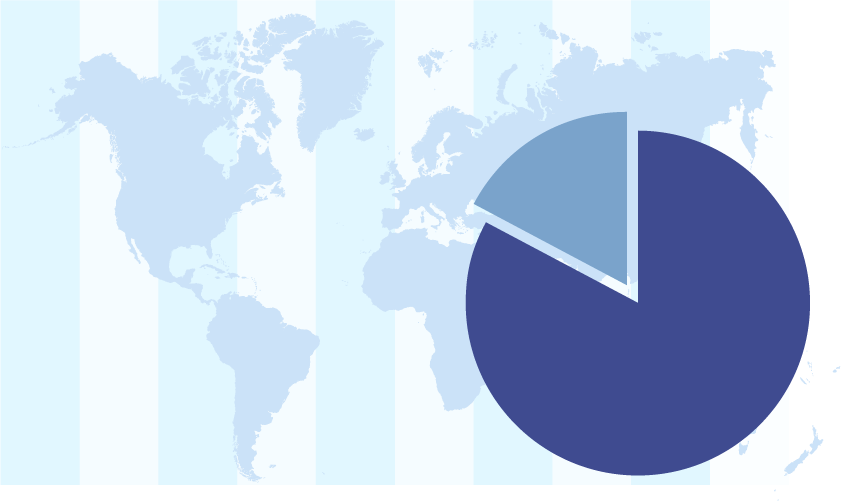
Only 41 of over 220 countries and territories in the world have epidemiological data on psoriasis in the general population.

The prevalence of psoriasis in children is below 1%* in every country.
In adults, prevalence of psoriasis varies between 0.15%* in Eastern Sub-Saharan Africa to 3.68%* in Australasia (*physician/dermatologist diagnosed).
Psoriasis prevalence varies depending on geographic location.


Considerable gaps still exist in the geographical areas reporting data on incidence and prevalence of psoriasis.

This website uses cookies!
We use cookies to tailor our content to your needs and continuously improve our website. You can decide which cookies you want to allow. Detailed information about the cookies we use can be found in our Privacy Policy and Cookie Settings. You can withdraw your consent at any time.

Research guide
RESEARCH GUIDE
INTERPRETATION OF THE ESTIMATES OF THE PREVALENCE OF PSORIASIS
HOW PREVALENCE ESTIMATES HAVE BEEN CALCULATED?
An extensive search of all clinical research evidence was conducted and all the published articles on the prevalence of psoriasis were identified. All the information reported was assessed and used to create a statistical model. The statistical model generated a pooled estimate of the prevalence of psoriasis for each individual country where data were identified.
Each prevalence measure is presented together with a range (credible interval) which represents the upper and lower limits where the estimate could credibly be expected to be. Therefore, these values are not to be interpreted as exact measures, but only as measures which can vary within a certain range.
The two different percentages presented are based on how psoriasis has been diagnosed:
Physician/dermatologist diagnosed means a person has visited a medical practitioner, typically a general practitioner, hospital doctor or dermatologist, and had a formal clinical diagnosis of their skin condition confirming it is psoriasis.
Self-reported diagnosis means a person was asked if they have psoriasis and they have responded to indicate that they did. This person might or might not have visited a doctor to receive a diagnosis, but the studies presenting these results do not confirm that a medical review was undertaken.
COUNTRIES WITH MISSING DATA
Many countries of the world do not have information on the prevalence of psoriasis. For these countries, without high quality original data sources, estimates were predicted using the statistical model created based on the data that were available. Therefore, predicted estimates are less reliable than for countries with original data sources and should be interpreted with caution.
ADULTS
Refers to all adult population.
AGE-SPECIFIC RATE
A rate for a specified age group (adults or children), in which the numerator and denominator refers to the same age group.
AGE-STANDARDISATION
A statistical technique that facilitates comparison of prevalence rates either between populations or over time, adjusting for differences in the age structure of the general population in the countries or regions being compared.
CHILDREN
Refers to all children and adolescents individuals.
COUNTRY
Prevalence data are presented for 220 countries and territories of the world *. Countries are nested into regions which are nested into super-regions.
DIAGNOSIS
The process of identifying a disease by its signs and symptoms. The diagnosis of psoriasis can be made either by a general practitioner/ physician or by a dermatologist.
INCIDENCE
The number of new cases arising in a given period in a specified population. This information can be expressed as an absolute number of cases per year or as a rate per 100,000 persons per year.
META-ANALYSIS
A statistical analysis that combines the results of multiple studies addressing the same question with the aim of deriving a pooled estimate closest to the unknown common truth.
OVERALL POPULATION
Refers to all individuals of any age, therefore children and adults combined.
PREVALENCE
The existing number of persons in a defined population who have been diagnosed with psoriasis. It is usually expressed as a proportion and can assume different definitions according to how it is measured. Therefore, it can be classified into: point, period and lifetime prevalence.
Point prevalence: when the number of cases refers to a specific time point (e.g. a year).
Period prevalence: when the number of cases refers to a time-window (e.g. between 2000 and 2010).
Lifetime prevalence: when it refers to the entire previous life of an individual (e.g. “Have you ever been diagnosed with psoriasis?”).
REGION
Prevalence data are presented for 21 regions of the world (which contain 220 countries and territories) *. Regions are nested into super-regions.
SUPER-REGION
Prevalence data are presented for 7 super-regions of the world (which contain 21 regions in which are nested 220 countries and territories) *.
CREDIBLE INTERVALS
Each prevalence measure is presented with a credible interval — a range of values, with an upper and lower limit, in which the estimate lies with a specified probability. This data has a 95% credible interval, this means there is a 95% probability that the prevalence rate lies within that range.
*according to the definition of the United Nations - https://population.un.org
Which of these best describes you?